

 4747 67 St #137, Red Deer, AB T4N 6H3, Canada

Sedation Dentistry in Red Deer
Sedation Dentistry Near You
Do you suffer from Dental Anxiety? We provide sedation at our Red Deer Dental Clinic.
We always offer a detailed explanation of every step of any procedure and what it will accomplish for you. This often helps reduce anxiety, but it may not provide a full sense of comfort. That’s why we provide sedation.
If you suffer from dental anxiety and it’s preventing you from getting regular check-ups or a needed procedure, please discuss it freely with one of our dentists. We know how to help.
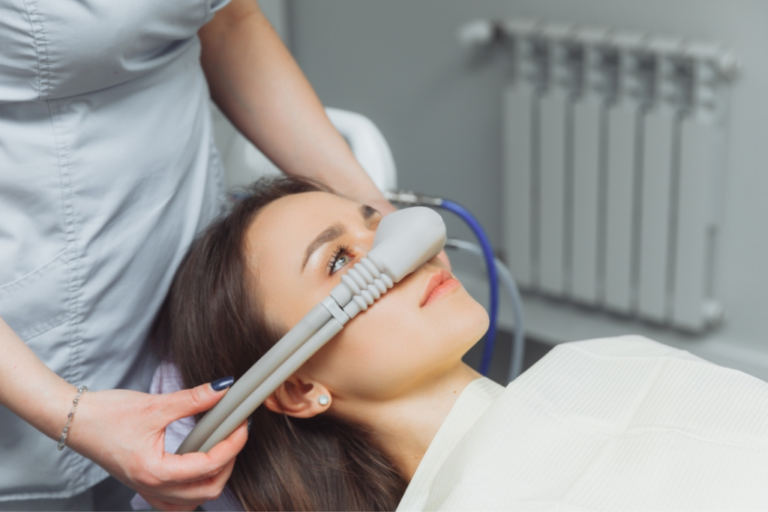
Nitrous Oxide (Laughing Gas) Sedation
Our method of sedation is nitrous oxide, which is also commonly called “laughing gas”. We use it to reduce anxiety and sensation during dental procedures.
For healthy patients, it’s a safe sedative agent mixed with oxygen and inhaled through a small mask that is placed over your nose.
It’s invisible, odourless, and tasteless.
What to Expect from Sedation Dentistry
We apply a breathing mask over your mouth that delivers oxygen. The amount of sedation needed is different for everyone, so we gradually increase the dose until you feel relaxed.
You will not be left alone at any time.
Common Experience and Benefits of Laughing Gas
- a tingling feeling in the arms and legs
- a level of physical well-being paired with a feeling of “floating” or euphoria
- a lower level of awareness and sensation during dental procedures (Many patients often don’t even feel the freezing going in!)
- no “hangover” effect
Should I Consider Sedation?
We consider your general health, history of allergies and your anxiety level to determine the best approach. Sedation dentistry near you is most appropriate for people who are afraid to go to the dentist near you and may be suitable for the patients who:
- have phobias related to dental procedures
- suffer from sensitive oral nerves
- have a low pain threshold
- have a bad gag reflex
- have a small mouth which becomes sore during dental work
- resist local anaesthetic
What are the Signs of Dental Anxiety?
You feel a sensation of discomfort and uncertainty which begins when it is time for your appointment and likely even in the days or weeks leading up to your appointment.
Some of the signs of anxiety are:
- sweating
- racing heartbeat
- low blood pressure
- risible distress or panic attack
- a lightheaded feeling
- shortness of breath
- nightmares or insomnia leading up to appointment
- using humour or aggression to cope
Methods for Reducing Anxiety Before and During Your Appointment
If you’re apprehensive about an upcoming dental visit, try these ways to help reduce your anxiety:
- Share your fears – share your fears and concerns with your dentist. Trust us, we’ve heard it all and we will help you to work through it.
- Focus on slow, normal deep breaths during the procedure.
- Listen to some music. (bring headphones to relax while you wait and during treatment).
- Use hand signals to communicate with your dentist – we’ll walk you through it!
- Choose a low-stress appointment time – choose a day and time that works best for you; often, first thing in the morning is ideal so that you don’t think about it all day.
Dental Axiety Knows No Bounds
If you have been putting off routine dental appointments and avoiding proper oral care, we encourage you to please discuss this with our team. Give us a call today.
FAQ
What is sedation dentistry?
Sedation dentistry uses drugs to calm you down or put you to sleep so that dental work can be done without any issue. Sedation Dentistry in Red Deer is good for individuals who are anxious or afraid of going to the dentist.
What are the different types of sedation used in dentistry?
Dentists use options like laughing gas (you’re not asleep but relaxed), oral tablets, or IV sedation (which will make you extremely relaxed). The choice will be based on how anxious you are and what procedure is required.
Can sedation dentistry help with dental anxiety?
Yes! It’s ideal for individuals who get anxious about the dental procedure. Sedation makes you relax and feel good, so you won’t be hesitant to return.
Sometimes. Laughing gas may not be covered, but deeper sedation might be if it is medically necessary. It is always better to ask your insurance company first.
A filling corrects small decay, whereas a root canal is used for larger issues when the nerve is involved. It saves the tooth and typically requires a crown afterwards.
Can sedation dentistry be used for routine check-ups or just for complex procedures?
It can be done for both! If you have fear or have special needs, even simple cleanings or exams can be accomplished under sedation, and not just big treatments.
How does sedation dentistry help with long dental appointments?
It makes it possible for you to relax and remain calm, making it easier to get a better finish work in one visit with less pain or fear. You may not even remember most of it!
Areas We Serve
Our dental clinic welcomes patients from Red Deer and nearby communities. Parkland Mall Dental Centre, located at 4747 67 St #137, Red Deer, AB T4N 6H3, Canada, provides dental care for patients of all ages in a friendly and comfortable setting. Whether you need regular checkups, restorative care, or cosmetic dental treatments, our team is here to help you maintain your smile with modern, personalized dental services close to home.
